How to Become a Licensed Massage Therapist in California
- Advanced Neuromuscular Therapy Program
- Associate of Applied Science Degree Program
- Core Massage Therapy Training Program
- Massage Therapy
CAMTC Certification, Training, and Costs
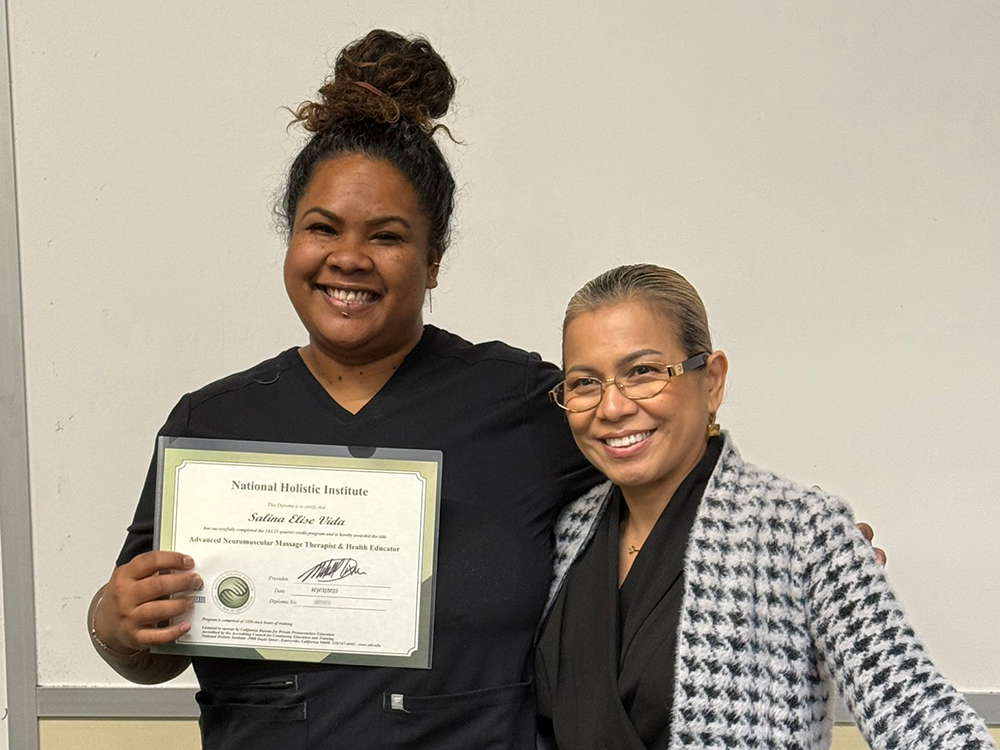
Salina Vida, Advanced Neuromuscular Therapy Program Graduate
Content Summary
Written from the perspective of a seasoned massage educator with 25 years in the field and 17 years teaching at National Holistic Institute (NHI), this guide clarifies how massage therapy credentialing works in California. It corrects the common misconception that California issues a state massage license, explaining that the California Massage Therapy Council (CAMTC) provides voluntary statewide certification while local ordinances and employers set specific expectations. Readers get a clear five-step roadmap to entering the field, details on NHI’s Core Massage Therapy Program and advanced pathways, realistic timelines and cost considerations, and broader context on career settings, professional associations, and workforce trends.
- Licensing vs. CAMTC Certification: Clarifies that California offers voluntary CAMTC certification rather than a state license, explains title restrictions, and highlights why checking city or county rules matters.
- Step-by-Step Path & NHI Training: Walks through exploring settings, choosing a CAMTC-approved school (500-hour minimum vs. NHI’s 800-hour Core Program with 160 supervised clinic/externship hours), Live Scan/application steps, and post-core options like ANMT and medical massage pathways.
- Timelines, Costs & Career Context: Outlines typical program timelines (around 8 months full-time or 12 months part-time at NHI plus roughly 90 days for a straightforward CAMTC review), extra expenses beyond tuition, alumni career paths, AMTA/ABMP resources, and BLS/ILO workforce context.
How do I become a Licensed Massage Therapist in California?
Quick Answer: California does not issue a state massage therapy license. Instead, the California Massage Therapy Council (CAMTC), a private nonprofit authorized under state law, offers voluntary certification. Some cities, counties, and employers require certification or other local authorization, so the rules where you plan to work matter. In everyday conversation, people may say “licensed massage therapist,” but in California, the credential to pursue is CAMTC certification.
I’ve spent 25 years in massage therapy, including 17 years teaching at the National Holistic Institute (NHI). I’ve seen people enter the profession from many backgrounds, often looking for work that feels meaningful and supports their goal of helping others. If you’re considering that path, here’s how California’s system works, what training involves, and where a massage therapy career might lead.
What “licensed” means in California
California does not license the massage therapy profession. CAMTC Certification is voluntary under state law, but some local governments require it, and employers may prefer or require it. CAMTC certification is recognized statewide and generally allows certificate holders to provide massage for compensation without obtaining separate local massage permits. A massage business may still need local business approvals. It is always best to check with local ordinances to fully understand the requirements of running a private practice or owning a business.
The terminology matters: California state law restricts people who are not CAMTC-certified from using titles such as “Licensed,” “Certified Massage Therapist,” “CMT”, and “CMP” for example. So, if you’re searching how to get a California massage license, look for information about CAMTC certification instead.
The Steps to Enter the Profession
- Explore the work and the settings
Massage therapists work in many settings, including spas, wellness clinics, private practices, sports environments, and other client-care settings. The work involves more than learning techniques. It also calls for clear communication, respect for client boundaries, knowledge of anatomy and safety, and the judgment to recognize when a client’s needs may be outside your scope of practice.
Talk with practicing massage therapists if you can. Ask what their workdays are like, what they wish they had known before starting, and what training helped them feel prepared. - Choose a CAMTC-Approved School and Program
New CAMTC applicants generally need at least 500 hours of massage education and training from CAMTC-approved programs. At least 100 hours must cover core subjects: anatomy and physiology, contraindications, health and hygiene, and business and ethics. Check that the specific school and program are currently on CAMTC’s approved list before enrolling.
When comparing school, look beyond the minimum hours. Ask how much supervised practice students receive, how they learn professional communication and draping, how instructors assess massage skills, and what support is available as students prepare for work. - Build Your Skills Through Education and Practice
A strong foundational program helps students connect classroom learning with client care. You’ll study the body, practice hands-on techniques, learn to adapt sessions to individual needs, and develop professional habits that support safe, respectful work.
This is where students begin moving from learning a technique to understanding when and how to use it. That growth takes practice, feedback, and reflection. - Apply for CAMTC Certification
CAMTC applicants must be at least 18 years of age and submit a completed application, pay the fee, complete Live Scan fingerprinting and a background check, and have official transcripts sent directly from their school.
CAMTC currently says an approved exam is not required for certification. Its Frequently Asked Questions estimate about 90 days to process a complete application with no education or background issues; applicants needing additional review can take longer. Check CAMTC’s current instructions before applying, because fees and requirements may change. - Check Local Requirements for Your Work Plans
Before accepting work or opening a business, contact the city or county where you plan to practice. Ask whether certification or a local permit is required for massage professionals, and what approvals apply to a business, fixed location, or independent practice. CAMTC certification can address the local massage permit requirements for certified professionals, while separate business requirements may still apply.
Why NHI is an Excellent Place to Begin
Choosing a school is a chance to build the knowledge, judgment, and practical skills you’ll bring into every session.
NHI’s Core Massage Therapy Program exceeds the 500-hour education minimum for new CAMTC applicants. Its curriculum includes anatomy, kinesiology, physiology, pathology, assessment, and a range of Eastern and Western massage therapy modalities. NHI also includes 160 hours of supervised client experience through on-campus student massage clinics and externships.
Graduating from NHI does not automatically certify a massage therapist in California. Certification requires a separate application and CAMTC review.
Continuing Education After the Core Program
For graduates who want to continue developing their skills, NHI offers an Advanced Neuromuscular Therapy (ANMT) Program. It builds on foundational massage education and includes advanced study in areas such as functional anatomy, orthopedic assessment, and neuromuscular therapy.
NHI also offers clinically driven medical massage education in its Associate of Applied Science Degree Program. These are continued education opportunities for graduates, not requirements for entry-level practice or CAMTC certification.
Massage Therapy and the Changing Healthcare Landscape
Massage therapy is becoming more visible in some hospitals, rehabilitation programs, pain-care settings, and interdisciplinary models. A recent review of massage therapy in palliative care describes growing participation in team-based care, while also identifying barriers to broaden integration. The direction is promising and the work of building consistent access, evidence, and professional recognition continues.
For massage therapists, this creates opportunities to strengthen clinical reasoning, communication, documentation, and collaboration with other providers. NHI’s Core, ANMT, and Medical Massage Clinician pathways can support that continued development. In California, healthcare collaboration does not change the credentialing distinction: CAMTC certification is not a state massage license, and therapists must practice within their training and applicable scope and local requirements. To achieve this career pathway, the additional education provided by NHI through the ANMT and Medical Massage Clinician program are necessary.
Where Can a Massage Therapy Career Lead?
There isn’t one standard career path after massage school. NHI graduates have pursued work in spas, private practice, sports massage, and clinical-focused settings. Their individual stories can help you picture some of those possibilities.
- Spa: Rikki Garcia’s story describes her path from the Core Program to working at Asha Urban Baths.
- Private Practice and Teaching: Sarah Stroup’s story follows her journey from Core Program graduate to practice owner and NHI Instructor.
- Sports and Advanced Clinical Work: Shadoe Himle’s story describes his transition into sports recovery and pain management after completing Core and ANMT training.
- Clinical-Focused Private Practice: Eva Chalupova’s story shares how she built a private practice after completing Core and ANMT.
- Medical Massage Clinician: Edith Harris’ story highlights how a USAF Veteran became a Medical Massage Clinician
These are examples of individual experiences, not promises of employment, income, or typical outcomes. Each person’s opportunities reflect their education, choices, experience, and circumstances.
A Human-Centered Career in a Changing Workplace
As artificial intelligence changes many kinds of work, massage therapy remains a hands-on, person-to-person profession. No career can be guaranteed immune to technological or economic change, so “AI-proof” overstates what anyone can know. Massage therapy does involve human presence, communication, consent, skilled touch, and the ability to adapt to a client in the moment.
The International Labour Organization’s 2025 analysis finds that generative AI is more likely to transform many jobs than eliminate them outright. That makes professional judgment, adaptability, and human connection valuable strengths for massage therapists to develop.
For national employment context, the U.S. Bureau of Labor Statistics projects massage therapist employment to grow 15% from 2025 to 2035. This is a national projection, not a California-specific forecast or a prediction about AI’s effect on the profession.
Professional Resources Beyond School
Massage school is a chance to begin building a professional community. Students and graduates may want to explore associations such as the American Massage Therapy Association (AMTA) and Associated Bodywork & Massage Professionals (ABMP). Depending on eligibility and membership type, resources may include student liability coverage for qualifying activities, educational materials, career resources, continuing education, networking, and advocacy. Review each organization’s current benefits and insurance terms to decide what fits your needs.
Neither AMTA or ABMP issues California massage credentials, and membership does not replace CAMTC certification or local requirements.
How Long Does Massage School Take and How Much Does it Cost?
The total time depends on the school, your schedule, and how quickly the CAMTC application is completed. NHI’s full-time program can take as little as 8 months; NHI does also offer a part-time program which can take approximately 12 months. After completing the requirements, CAMTC estimates about 90 days for a complete application without education or background issues.
Budget for more than tuition. Depending on the school of choice, costs may include books and supplies, registration, the CAMTC fee, Live Scan vendor fees, and other school-related expenses. Ask NHI for a written cost breakdown and verify CAMTC’s current fee schedule before applying.
Frequently Asked Questions
Does California have a massage therapist license?
No. California does not issue a state massage therapy license. CAMTC offers voluntary certification, while some cities and counties have local requirements.
How many training hours do I need for CAMTC certification?
New applicants generally need a minimum of 500 hours from a CAMTC-approved program, including at least 100 hours in the specified core subjects.
Is the MBLEx required in California?
CAMTC currently says passage of an approved exam is not required for certification. NHI recommends all graduates take the MBLEx in case alumni choose to relocate outside of California.
Can I practice massage therapy without CAMTC certification?
Certification is voluntary under state law, but local requirements vary. Some jurisdictions require CAMTC certification or other local authorization. Check with the city or county where you plan to work.
Can CAMTC accept education from another state?
CAMTC evaluates out-of-state education under its current policies; it does not have reciprocity with other states. Contact CAMTC to learn whether your specific education meets its requirements.
How often do I renew CAMTC certification?
CAMTC certification is valid for two years, and certificate holders must apply for recertification. Check CAMTC’s current renewal instructions and fees.
The First Step is the Beginning
California’s system can seem confusing because people say “licensed” when the state actually offers CAMTC certification. Once you understand that distinction, the path is more straightforward: choose an approved massage therapy program, complete the education, apply for certification, and check the local rules where you plan to work.
The credential may open doors. The education, practice, and care you bring to the profession are what help you grow once you walk through them.
About the Author
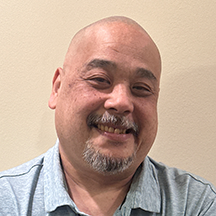
Phil Okazaki
Phil Okazaki is a massage therapist, educator, and an industry volunteer with 25 years of experience in the field and 17 years of teaching experience.
In addition to his educational experience of developing curriculum and mentoring therapists, he has several years of volunteer experience with the American Massage Therapy Association including 4 years as President of the AMTA California Chapter.
He has dedicated his career to elevating standards in massage therapy education and supporting the growth of the profession as an integral component of healthcare.
Phil is the Advanced Neuromuscular Therapy Program Manager at National Holistic Institute.
Get the details on how to pursue a career in massage therapy and neuromuscular therapy with National Holistic Institute. Complete this form to connect with an admissions representative today.