Working as Part of the Team | Trust, Scope of Practice, and Collaboration in Professional Sports
The Role of Neuromuscular Therapy in Professional Sports, Part 2
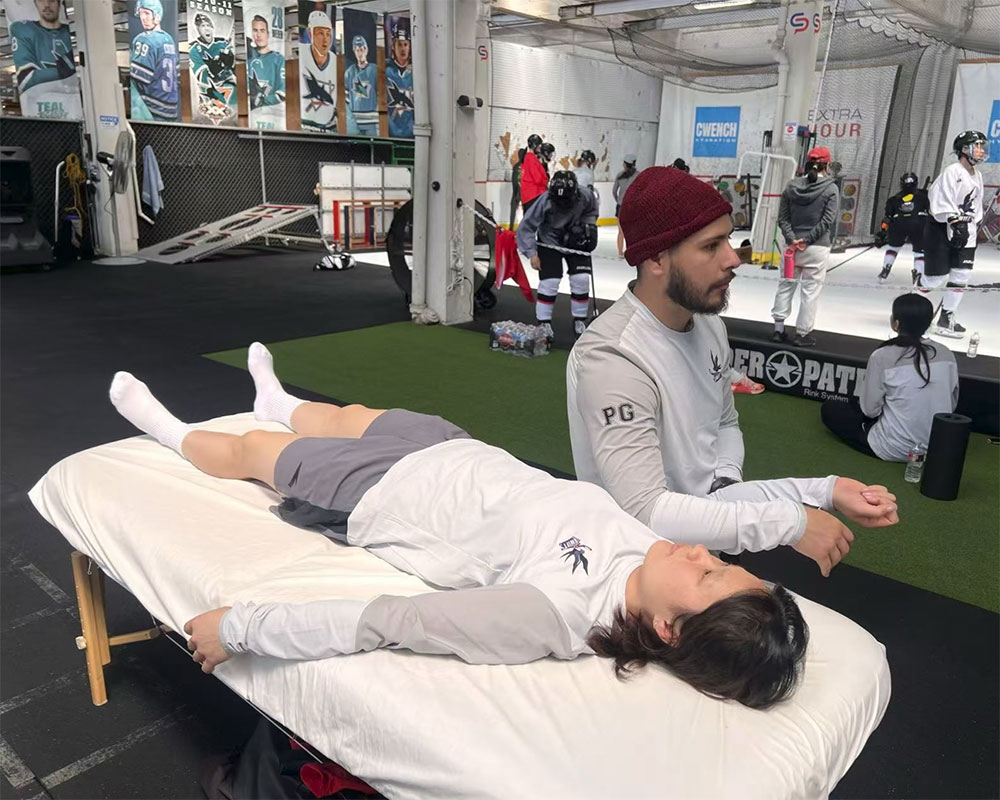
Paul Gowans working with a Youth Goalie Camp participant in Pleasanton, CA
Content Summary
In Part 2 of The Role of Neuromuscular Therapy in Professional Sports, Neuromuscular Therapists Paul Gowans and Phil Luis discuss how massage therapists successfully integrate into interdisciplinary sports medicine teams. Drawing from a panel discussion, they highlight the critical balance between clinical observation, professional boundaries, and athlete advocacy, emphasizing that NMT success relies on clear documentation, scope-of-practice boundaries, and interprofessional trust.
- Collaborative Scope & Non-Diagnostic Communication | How to report tissue responses, movement limitations, and subjective feedback to athletic trainers and physicians without exceeding scope or diagnosing.
- Documentation & Continuity of Care | The role of clear, concise SOAP notes in establishing credibility with medical staff and providing seamless care for traveling or multi-provider athletes.
- Earning Athlete & Team Trust | Navigating athlete advocacy under pressure, maintaining professional boundaries in high-profile settings, and recognizing physical/mental fatigue or when to refer out.
Technical skill may open the door to professional sports, but earning the confidence of athletes, medical professionals, and performance staff requires something more: critical clinical thinking, clear communication, professional boundaries, and contributing without exceeding a Massage Therapist’s scope of practice.
In Part 1 of this series, The Role of Neuromuscular Therapy in Professional Sports, Neuromuscular Therapists Paul and Phil discussed the clinical reasoning that guides treatment inside the professional sports treatment room. They explained how training load, travel, sleep, tissue response, recovery, and upcoming performance demands influence the decisions made during each session.
Those decisions do not occur in isolation.
Professional athletes are typically supported by athletic trainers, physicians, physical therapists, strength and conditioning professionals, chiropractors, acupuncturists, sports psychologists, and coaches, and massage therapists. Each professional sees the athlete through a different lens and contributes a specific area of expertise.
The neuromuscular therapist’s value does not come from trying to control the athlete’s entire care plan, it comes from contributing meaningful observations, supporting the established performance goals, respecting professional boundaries, and recognizing when another provider is needed.
During a recent NHI panel discussion, Phil and Paul shared their perspectives on athlete advocacy, scope of practice, referral, confidentiality, and earning trust within a professional sports environment. Their responses have been edited for length and clarity while preserving the meaning of the original conversation.
Meet the Neuromuscular Therapists
Paul Gowans of Free Motion Therapy
Paul Gowans is a neuromuscular therapist with a passion for helping individuals alleviate pain and improve their quality of life.
Paul holds additional certifications in personal training, Manual Lymphatic Drainage, Neurokinetic Therapy, cupping therapy, kinesiology taping, instrumented soft tissue mobilization, and Z-Health (functional neurology for pain relief and performance enhancement).
Paul’s career has included work with the San Jose Barracudas and the Chinese Women’s National Ice Hockey Team. His private practice, Free Motion Therapy, can be found in San Jose.
Phil Luis of Sports Medicine Institute
Phil Luis was always an active youth. His love of competitive football, track & field, basketball, and volleyball fueled an interest in the human body and sports medicine.
Inspired by his family, Phil also knew he wanted to pursue a career where he was helping other people. Massage therapy seemed like a natural fit. His passion and knowledge allow him to design unique treatment plans and provide the best possible care for his clients.
Phil works regularly with the Stanford and Santa Clara Cross Country and Track & Field Teams, Palo Alto Stanford Aquatics, and professional athletes through the Sports Medicine Institute in Palo Alto.
What does effective collaboration look like in a professional sports environment?
Paul | Collaboration begins with understanding what everyone has already done and what each professional is responsible for. When the athlete has given permission for information to be shared, I want to understand what the athletic trainer, physical therapist, strength coach, or another provider has observed.
I can then contribute what I found during my assessment and treatment. I might describe where the athlete reported discomfort, what movements appeared limited, how the tissue responded, or what changed following the session.
The goal is not to take control of the case. It is to compare information and determine how our different roles can support one another.
There must be clear boundaries between our scopes of practice, but there is also an opportunity to coordinate our efforts. That is where collaboration becomes valuable; and sometimes challenging.
Phil | Collaboration is essential if we want to elevate the role of massage therapy in professional sports.
We build trust with athletic trainers, physical therapists, physicians, and other healthcare professionals by demonstrating that we are knowledgeable, dependable, and capable of contributing within our scope.
The massage therapist should not assume they are the only person who understands what the athlete needs. Coordinated care allows multiple professionals to contribute their expertise and view the athlete from different perspectives.
When those perspectives are shared respectfully, the athlete receives more comprehensive support.
Professional Takeaway | Collaboration is not about becoming the leader of every case. It is about contributing relevant information while respecting the expertise, authority, and responsibility of the other professionals involved.
How do you communicate useful information without diagnosing?
Paul | I do not diagnose or prescribe. I communicate what the athlete reported, what I observed, what I provided, and how the athlete responded.
I might explain that the athlete experienced discomfort during a particular movement, that I observed a limitation, or that a specific intervention changed the athlete’s movement or symptoms. I can describe those findings without claiming to identify a medical condition.
It is important not to enter the room trying to become the loudest or most important person. That can quickly damage a professional relationship.
A better approach is, “This is what I observed. This is what I did. This is how the athlete responded. How does that compare with what you are seeing?”
That invites collaboration instead of competition.
Phil | Professional language matters. Massage therapists must communicate with athletic trainers, physical therapists, physicians, and other healthcare professionals in a way that is accurate, concise, and clinically useful.
That requires knowledge of anatomy, kinesiology, appropriate medical terminology, and documentation. It also requires understanding the difference between an observation and a diagnosis.
We can describe tenderness, guarding, altered movement, changes in range of motion, and the athlete’s response to treatment. We should not present those findings as a diagnosis that we are not qualified or authorized to make.
When we communicate clearly about what falls within our role, other professionals can better understand how our observations may contribute to the athlete’s care.
Professional Takeaway |Stay with what the athlete reported, what you observed, what you provided, and what changed. Accurate observations support collaboration; unsupported conclusions can undermine it.
What role does documentation play in earning professional trust?
Phil | Documentation demonstrates that the therapist can organize and communicate clinical information responsibly.
SOAP Notes should allow another provider to understand why the athlete was seen, what the athlete reported, what the therapist observed, what was provided, and how the athlete responded.
Other professionals may not have time to read a long narrative. They need information that is clear, concise, relevant, and within the therapist’s scope.
Well written notes help establish credibility. Poor documentation, vague terminology, or statements that sound diagnostic can cause other providers to question the therapist’s judgement.
Paul | Documentation also supports continuity of care. Athletes may work with several professionals, travel frequently, or receive treatment in different locations.
Clear records make it easier to identify patterns over time. They may show whether an athlete repeatedly reports the same problem, whether a particular intervention consistently produces a change, or whether the presentation is moving beyond what the therapist can appropriately address.
Documentation can also prevent the athlete from having to repeat the same information to every provider.
Professional Takeaway | Documentation is more than an administrative requirement. It communicates clinical reasoning, supports continuity of care, and demonstrates that the therapist can contribute responsibly to an interdisciplinary team.
How do you advocate for an athlete who feels pressured to return before feeling ready?
Paul | This can become complicated because the pressure may come from the coach, the team, a contract, a scholarship, or the athlete’s own desire to compete.
Whenever possible, communication should involve the athlete and the appropriate members of the medical or performance team. The athlete may decide to speak with the coach directly, or the athlete and provider may arrange a conversation together.
I encourage athletes to consider what is best for their bodies and long-term careers. They only have one body, and an unresolved problem may follow them into the next level of competition.
At the same time, I have to protect my scope. I can share observations, express concerns, and support the athlete, but I should not make a return-to-play decision that belongs to an authorized medical professional or the team’s established process.
Phil | We want to advocate for the athlete while respecting the responsibilities of the coaching and medical staff.
The massage therapist can explain what the athlete is reporting, documenting relevant observations, describe how the athlete responded during the session, and make sure the appropriate healthcare professionals know about the concern.
Return-to-play decisions belong to the authorized medical and performance professionals. Our responsibility is to communicate what we know and contribute appropriately within our role.
These situations can be especially difficult in professional sports because participation may affect an athlete’s income, contract, roster position, or future opportunities. That makes careful, objective, non-judgmental communication even more important.
Professional Takeaway | Athlete advocacy does not require exceeding professional authority. It requires listening, documenting, communicating concerns, respecting athlete autonomy, and involving the appropriate professionals.
What behaviors help therapists build trust with athletes?
Paul |Connection matters. A therapist can have excellent hands-on skills, but if the athlete does not feel understood, it may be difficult to achieve the desired outcome.
Understanding the athlete’s sport can help establish that connection. When I understand what the athlete is being asked to do, I can ask better questions and relate the treatment to their experience.
Trust also depends on listening to the athlete’s body. If the athlete says the pressure is excessive or the tissue begins guarding, I need to respond.
Continuing simply because I want a “knot” to release tells the athlete that I am more committed to my technique than to their experience.
Phil | High-profile athletes often appreciate being treated like regular people. Outside the treatment room, they may receive constant attention from fans, coaches, the media, and others.
The treatment environment may be one of the few places where they can stop performing, be vulnerable, and focus on what they need.
Professionalism, preparation, a positive attitude, and consistent communication all help establish rapport. The athlete should feel that the therapist is present, focused, and genuinely listening.
Professional Takeaway | Trust develops when athletes feel heard, respected, and safe; not simply when a therapist performs an impressive technique.
Why should the treatment room be considered a protected professional space?
Phil | Athletes may use the treatment room to discuss pain, uncertainty, fatigue, fear, or frustration. They should not also have to manage the therapist’s excitement about their celebrity or status.
Asking for autographs, behaving like a fan, or treating the session as a personal opportunity changes the purpose of the room.
The athlete needs to know that the therapist is there to provide care; not to gain access to their public identity.
Paul | Professional sports is a small community. Athletes and staff notice whether a therapist respects privacy, professional boundaries, and the culture of the organization.
Therapists need to be careful about what they discus, how they handle information, and how they speak about athletes outside the treatment room.
Trust may take considerable time to build, but one poor decision can damage it quickly.
Professional Takeaway | The treatment room should allow the athlete to be a person rather than a performer. Privacy, discretion, boundaries, and professional conduct are essential parts of the care being provided.
What can quickly damage trust?
Paul | Poor communication, excessive pressure, lack of professionalism, and failing to respond to the athlete’s feedback can all damage the relationship.
If the athlete says the pressure is too much, or the tissue is clearly guarding, and the therapist continues because a “knot” has not released, the therapist is no longer responding to the person in front of them.
Refusing to collaborate can also damage trust. Acting as though the athlete only needs massage, or only needs one particular therapist, creates concern. No individual provider has every answer.
Phil | Arriving with a negative attitude, failing to communicate, exaggerating your abilities, or presenting work that you cannot support clinically will quickly reduce confidence.
Therapists should also avoid acting like fans. Asking for autographs, joking about injuries, gossiping about teammates, or discussing another athlete’s condition can undermine trust and threaten future opportunities.
If athletes hear you sharing someone else’s private information, they may reasonably assume that you will eventually share theirs.
Professional Takeaway | Trust is weakened by poor boundaries, gossip, fan behavior, inflated claims, unreliability, excessive treatment, and failure to respect the athlete’s feedback.
How can massage therapists recognize physical or mental fatigue?
Paul | When performance information is available, we can compare the athlete’s current results with their established baseline.
If bar speed, power output, jump height, or another key performance indicator has decreased, the athlete may not be ready for the planned workload. The performance staff may respond by reducing the weight, volume, repetitions, or intensity and increasing recovery.
I also consider the athlete’s entire day. Someone who skates for two hours, lifts for another two hours, and then works for several more hours may be physically and mentally depleted.
Sometimes the athlete does not need another demanding intervention. They need recovery.
Phil | Mental fatigue can be more nuanced and may move beyond the massage therapist’s scope. Professional organizations may have sports psychologists or other qualified professional who are better prepared to evaluate and manage those concerns.
Massage therapists may still be among the first people to hear that something is wrong. We often spend more uninterrupted time with athletes than many other providers. Because of that rapport, an athlete may tell us about poor sleep, fear, stress, pressure, or fatigue that they have not discussed with anyone else.
We can listen, document what the athlete reports, and, with permission and according to team policy, communicate relevant concerns to the appropriate professional.
Professional Takeaway | Massage therapists do not diagnose psychological conditions, but they may be among the first professionals to learn that an athlete is struggling. Listening, documenting, referring, and collaborating are meaningful contributions.
What if an athlete relies on the massage therapist for psychological support and refuses a referral or collaboration?
Paul | We can be supportive while remaining clear about our intentions.
If the athlete continues to struggle and the work I provide is not creating meaningful change, I may need to explain that another professional has knowledge and resources that I do not.
I have told athletes that I could continue helping them maintain their current level of performance, but I could not take them further without additional support. Occasionally, that has meant losing the athlete as a client.
That can be difficult, but protecting the athlete and remaining within scope must come first.
Phil | It is always appropriate to refer when an athlete’s needs exceed your education or professional role.
Massage therapists are not psychologist or psychiatrists. We can listen, demonstrate empathy, and encourage the athlete to seek qualified care, but we should not present ourselves as the only person they need.
A therapist who tells clients to see only them should raise concern. Collaborative care is usually stronger care.
Professional Takeaway | Rapport does not expand scope. The more an athlete trusts a therapist, the more important it becomes for the therapist to use that trust responsibly.
How do therapists know when not to treat?
Paul | Knowing when to refer and when not to work was one of the most important lessons I learned through advanced neuromuscular therapy education.
We learn many assessment and treatment techniques, but those tools should not be used when the client’s presentation is unsafe or requires another healthcare professional.
You do not have to know everything. You need to know enough to recognize when it is not appropriate for you to proceed.
Phil | Therapists sometimes feel pressure to provide a service because the athlete is already in the treatment room or expects something to be done.
Professional judgement may require the therapist to pause, consult another provider, or decline treatment. That is not a failure. It is part of responsible practice.
Our value is not measured by whether we perform a technique during every encounter. Sometimes the most important contribution we can make is to recognize that the athlete needs someone else.
Professional Takeaway | Knowing when not to treat is a clinical skill. Appropriate referral protects the athlete, the therapist, and the integrity of the entire care team.
How do massage therapists earn the confidence of the medical and performance staff?
Phil | When I enter a new training room, I introduce myself to the athletic trainer and ask how my skills can support the team that day.
That communicates that I am there to contribute – not compete for authority.
Trust develops through consistent behavior; arriving on time, being prepared, providing quality work, communicating clearly, documenting appropriately, maintaining confidentiality, and remaining within scope.
Once the staff knows that you are dependable, they are more likely to refer athletes to you and include you in the collaborative process.
Paul | The therapist’s work should support what the rest of the team is trying to accomplish.
If the athletic trainer, strength coach, physical therapist, and massage therapists are all moving in different directions, the athlete receives and fragmented experience.
I want to understand the larger plan and make sure my work complements it. Credibility comes from repeated interactions; doing what you said you would do, communicating what matters, and not pretending to know what you do not know.
Professional Takeaway | Professional trust is cumulative. It is earned through preparation, consistency, sound judgment, useful communication, and respect for the team’s shared objectives.
The Neuromuscular Therapist is part of the team, not the entire team
Neuromuscular therapists can make a meaningful contribution in professional sports. They may identify changes in tissue response, movement, recovery, or athlete readiness that add valuable information to the larger performance picture.
That contribution is most effective when integrated with the work of the athlete, athletic trainers, physicians, physical therapists, strength and conditioning professionals, sports psychologists, coaches, and other providers.
Massage therapists do not need to diagnose every problem, control every decision, or provide every solution. They need to understand what they can contribute, communicate it clearly, and recognize when the athlete requires something beyond their role.
Trust makes collaboration possible. Scope of practice keeps it safe. Communication makes it useful.
At the professional level, technical skill may earn a therapist an opportunity. Judgement, boundaries, and the ability to function as part of a team determines whether that therapist continues to be invited into the room.
In Part 3 of The Role of Neuromuscular Therapy in Professional Sports, Paul and Phil discuss education, mentorship, networking, career readiness, and the path from massage school to working with professional athletes.
Looking for Part 1? Explore The Role of Neuromuscular Therapy in Professional Sports here.
Get the details on how to pursue a career in massage therapy and neuromuscular therapy with National Holistic Institute. Complete this form to connect with an admissions representative today.