Earning Your Place | The Path from Massage School to Professional Sports
The Role of Neuromuscular Therapy in Professional Sports, Part 3
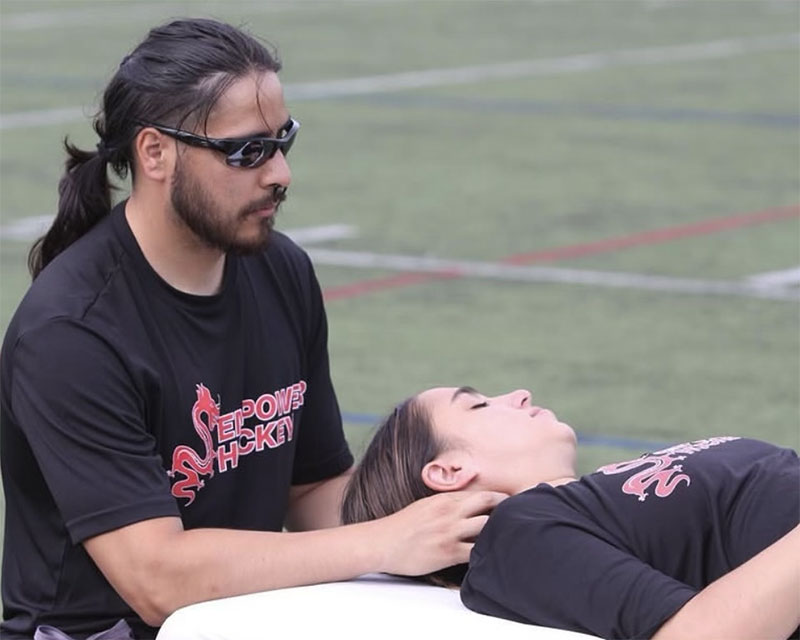
Paul Gowans working with an athlete on the sidelines
Content Summary
In this third and final installment of The Role of Neuromuscular Therapy in Professional Sports, Neuromuscular Therapists Paul Gowans and Phil Luis outline the long-term career pathway from massage student to elite sports therapist. Drawing from their panel discussion, they demystify the industry by revealing how externships, clinical adaptability, honest self-assessment, and continuing education form the true foundation of career longevity in professional sports—far beyond simple networking or social media visibility.
- Preparation Over Access | Why early opportunities (externships, community events, private clients) require proven clinical judgment, and how saying “no” to opportunities before you are ready protects your career.
- The Power of Foundational & Advanced Education | How treating the general population builds the adaptability needed for elite athletes, and why advanced NMT education provides the assessment skills to know when and when not to treat.
- Building Professional Reputation | Why habits practiced during school—punctuality, professional language, response to feedback, and scope-of-practice boundaries—serve as an ongoing “job interview” for future team positions.
Careers in professional sports rarely begin with a single dramatic opportunity. They are built through education repeated practice, strong relationships, honest self-assessment, and the professional habits demonstrated long before a therapist enters an elite training room.
In Part 1 of this series, neuromuscular therapists Paul and Phil explored the clinical reasoning behind treatment decisions in professional sports. Part 2 examined trust, scope of practice, athlete advocacy, and collaboration with the larger medical and performance team.
This third and final part of the series focuses on getting there.
Many massage therapy students imagine that working in professional sports begins with meeting the right athlete or receiving an invitation from the right organization. Relationships can certainly open doors, but access alone does not create a sustainable career.
Therapists must be prepared to assess unfamiliar situations, communicate professionally, accept feedback, recognize their limitations, and make responsible decisions under pressure. The habits that determine whether someone succeeds in a professional training room often begin much earlier – in the classroom, student clinic, externship, private practice, or first entry-level position.
During a recent NHI panel discussion, Paul and Phil shared how their careers developed, what helped them prepare for high-level opportunities, and what students should understand about pursuing work in professional sports. Their response have been edited for length and clarity while preserving the meaning of the original conversation.
Meet the Neuromuscular Therapists
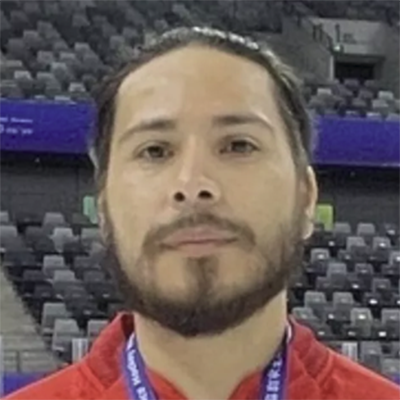
Paul Gowans of Free Motion Therapy
Paul Gowans is a neuromuscular therapist with a passion for helping individuals alleviate pain and improve their quality of life.
Paul holds additional certifications in personal training, Manual Lymphatic Drainage, Neurokinetic Therapy, cupping therapy, kinesiology taping, instrumented soft tissue mobilization, and Z-Health (functional neurology for pain relief and performance enhancement).
Paul’s career has included work with the San Jose Barracudas and the Chinese Women’s National Ice Hockey Team. His private practice, Free Motion Therapy, can be found in San Jose.
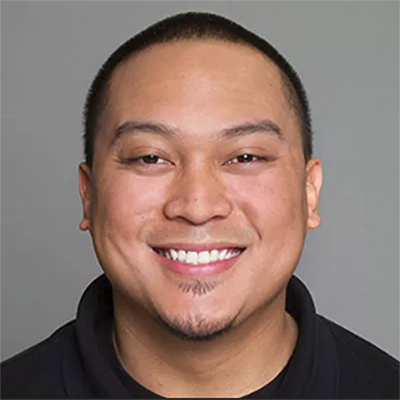
Phil Luis of Sports Medicine Institute
Phil Luis was always an active youth. His love of competitive football, track & field, basketball, and volleyball fueled an interest in the human body and sports medicine.
Inspired by his family, Phil also knew he wanted to pursue a career where he was helping other people. Massage therapy seemed like a natural fit. His passion and knowledge allow him to design unique treatment plans and provide the best possible care for his clients.
Phil works regularly with the Stanford and Santa Clara Cross Country and Track & Field Teams, Palo Alto Stanford Aquatics, and professional athletes through the Sports Medicine Institute in Palo Alto.
How did you receive your first opportunity in professional sports?
Paul |My first opportunity came through an old high school friend who saw a social-media post about my work. She was beginning her professional hockey career and had a recurring shoulder issue.
I was enrolled in the Advanced Neuromuscular Therapy program at the time and had recently completed the shoulder/thoracic portion of the curriculum. That gave me an opportunity to apply what I had been learning.
I performed a detailed assessment, provided focused trigger-point and neuromuscular therapy work, and incorporated movement reeducation related to her shot. The opportunity came through an existing relationship, but the results and professionalism allowed that relationship to continue
Networking may help someone find you, but your preparation determines what happens next. Someone may open the door, but what you provide determines whether you remain there.
Phil | My first major opportunity also began while I was a student at NHI. I secured an externship with the organization where I would eventually work and used the foundational education I had received to contribute in that clinical environment.
Professional sports is a relatively small community, and there are limited opportunities to demonstrate what massage therapists can provide. When an opportunity appears – whether through an externship, high school, youth sports program, community event, private client, or professional contact – you must be prepared to make the most of it.
The first opportunity may not look like the final career you imagined. It may simply be the place where someone begins observing your attitude, reliability, and potential.
Professional Takeaway | Relationships can create access, but preparation, results, and professional conduct determine whether an initial opportunity develops into a lasting role.
How did your expectations change after entering professional practice?
Paul | My first client after graduation had a shoulder replacement, knee replacement, scoliosis, and a recent motor-vehicle accident. I quickly realized that completing an entry-level massage program did not mean I was prepared for every complex presentation.
That experience motivated me to continue my education and develop stronger assessment skills.
Working in a busy clinic also taught me to assess efficiently, adapt during treatment, and make decisions under time pressure. Those skills later transferred into professional sports, where the treatment window may be limited and the athlete’s needs can change quickly.
The clinic did not look like the professional sports environment I eventually wanted to enter, but it helped me develop the skills I would need when that opportunity arrived.
Phil | I entered massage therapy intending to work in sports. Once I entered the field, I was humbled by the education and experience of the professionals around me.
Wanting to work in sports and being prepared to contribute in that environment are not the same thing. I needed to continue developing my anatomy, assessment, palpation, clinical reasoning, and communication skills.
My goal also expanded. I no longer wanted only to work with athletes; I wanted to help advance the massage therapy profession. Every time a massage therapist enters a medical or performance environment, that therapist has an opportunity to demonstrate that we belong there and can contribute meaningfully.
That confidence must be supported by education, professional behavior, and lifelong learning.
Professional Takeaway | Early practice often reveals how much more there is to learn. Experiences outside professional sports can develop the adaptability, judgment, and efficiency required inside it.
Is working with professional athletes more difficult than working with the general public?
Paul | In many situations, the general population is more challenging.
Professional athletes often have access to high-quality medical resources, understand their bodies, and are highly motivated to complete rehabilitation because their careers depend on it.
Members of the general population may arrive with joint replacements, chronic conditions, old injuries, movement limitations, and the expectation that a problem that developed over 20 years can be corrected in one session. They may also be less consistent with movement recommendations or self-care.
Working with the general public can teach therapists how to communicate, manage expectations, adapt treatments, and address complex health histories. Those are valuable skills in any clinical environment.
Phil | Athletes are accustomed to working with healthcare and performance professionals. They often understand that improvement is a process and can describe what they are experiencing in relation to their sport.
The general population may require more education and support. However, I treat everyone like an athlete.
A person that sits at a desk for 12 hours still has performance demands. Their daily activities require endurance, movement, recovery, and adaptation. Treatment should consider workload, posture, function, lifestyle, and recovery just as it would for a competitive athlete.
The setting may be different, but the responsibility to assess thoughtfully and provide individualized care remains the same.
Professional Takeaway | Every client can help a therapist develop skills relevant to professional sports. Complexity, communication, clinical reasoning, and adaptability are not limited to elite athletes.
Which continuing education experiences have been most valuable?
Paul | Advanced neuromuscular therapy remains the foundation of my work. Additional education in nervous-system assessment, movement, and personal training has expanded how I think, but most of my sessions still rely on foundation massage and advanced neuromuscular principles.
The additional tools complement the foundation; they do not replace it.
Continuing education is most useful when it helps therapists better understand what they are already observing in practice. It should improve decision-making rather than simply add another technique.
Phil | Soft tissue work and trigger point therapy are the foundation of my approach. Training in cupping, taping, and instrument-assisted soft-tissue techniques has added option to my tool belt, but I continue to rely heavily on my hands, palpation, assessment, and clinical reasoning.
The important question is not how many modalities a therapist knows. It is whether the therapist can determine what the athlete needs and use the available tools appropriately.
A therapist with 20 techniques but limited assessment skills may be less effective than a therapist with a strong foundation who understands how to select and adapt a few well-developed approaches.
Professional Takeaway | Continuing education should deepen clinical reasoning and expand useful options. It should not become a collection of techniques disconnected from assessment and purpose.
How Should Therapists Select Continuing Education Courses?
Paul | Start by identifying what you do not know. Therapists should also become comfortable with the material they have already learning before rushing toward the next technique.
Repetition matters. Reviewing instructional videos, practicing, working with mentors, serving as a teaching assistant, and eventually teaching others can all deepen understanding.
The more I teach or assist students, the more thoroughly I understand the material. Explaining a concept requires you to organize your knowledge and recognize where gaps still exist.
Phil | Do not become distracted by every new or visually impressive modality. First, determine who your clients are and what problems you repeatedly encounter.
Then, pursue education that gives you the knowledge and tools to serve those clients more effectively.
Speak with instructors, graduates, and experienced therapists. Ask what they actually use in practice – not merely which classes they have attended. Consider whether the course strengthens your foundation, addresses a genuine need, and fits within your intended scope of practice.
A continuing education course should change how you think or improve how you work. It should not become another certificate that is never used.
Professional Takeaway | Select continuing education according to the needs of your clients, the gaps in your knowledge, and the direction of your practice, not according to novelty alone.
How do therapists know when they are ready for a high-level opportunity?
Paul | Readiness requires honest self-assessment.
Early in my career, I declined an opportunity with a professional football organization because I had recently graduated from the advanced program and did not believe I was prepared for that level of responsibility.
It was a difficult decision because it was the type of opportunity I wanted. However, accepting it before I was ready could have harmed the athlete, my reputation, and future opportunities.
Later, while working with an international hockey team, an athlete developed a severe ankle pain during practice. I had to assess, treat, reassess, and adapt while the coach and team waited.
That experience showed me that I could remain calm, integrate what I had learning, and make effective decisions under pressure.
You do not have to accept every opportunity. It is better to continue developing your ability than to enter your dream environment before you can support it responsibly.
Phil | After many years in the profession, I still recognize that there is more to learn. Science changes, athletes present new challenges, and no therapist ever completely finishes developing.
Readiness does not mean believing you know everything. It means possessing a strong foundation, understanding your limits, communicating responsibly, and being willing to ask questions or refer when necessary.
Maintaining a growth mindset keeps therapists preparing for the situations they haven’t not encountered yet.
Professional Takeaway | Readiness combines competence with humility. A prepared therapist can make decisions under pressure while still recognizing when help, consultation, or referral is needed.
What professional habits should students begin developing now?
Paul | Identify what you do well and what still needs improvement. Do not spend all your time practicing your strongest skill while avoiding the areas that challenge you.
Show up to class. Attend bodywork days. Prepare for assessments. Practice with different partners and learn how to work with different body types, personalities, and communication styles.
Become comfortable receiving correction. The expectations inside a professional training room will be much greater than those in the classroom.
Students should also begin networking naturally. Place yourself in environments connected to the work you hope to do. Develop relevant experience through youth sports, high schools, community events, performing arts, private practice, or other appropriate entry points.
Phil | Focus on attitude and effort because those are always within your control.
Apply yourself to your education and build the knowledge you will need before entering the field. Professional habits begin in school.
Attendance, punctuality, clinical language, documentation, communication, preparation, and the way you respond to feedback all matter. Instructors and classmates may eventually become employers, colleagues, referral partners, or the people asked whether they would recommend you.
When you enter a professional environment, you represent yourself, your employer, your school, and the massage therapy profession.
Professional Takeaway | Students do not suddenly become professionals after graduation. Professional identity is built through the habits they practice throughout their education.
How important is networking?
Paul | Networking is important, but it should be genuine.
My first professional sports opportunity came through someone I already knew. That relationship created an introduction, but the relationship alone could not provide the assessment, treatment, or judgement the athlete needed.
Begin building relationships before you need something from people. Participate in the profession, attend events, support colleagues, and demonstrate genuine interest in the work.
Your network should know more than what job you want. They should know how you work, how you treat people, and whether they can trust you.
Phil | Professional sports is a small community. Coaches, therapists, athletes, and healthcare professional speak with one another.
Think of every professional interaction as a job interview. Every action, habit, interaction, therapeutic intervention is observed. Know that you are being evaluated and appraised at every moment of every day during every interaction. It’s not a matter of turning on a performance, it’s being the professional every day.
Professional Takeaway | The strongest professional network is built through relationships and reputation. People recommend therapists whose judgement, character, and work they have learned to trust.
What was the most important lesson you took from advanced neuromuscular therapy education?
Paul | Knowing when to refer and when not to work was one of my greatest lessons.
We learn many assessment and treatment techniques, but those tools should not be used when the client’s presentation is unsafe or requires another healthcare professional.
You do not need to know everything. You need to know enough to recognize when it is not appropriate for you to proceed.
That judgement becomes even more important in a high-pressure environment where an athlete, coach, or organization may want an immediate solution.
Phil | My greatest takeaway was the depth of knowledge.
The assessment procedures, orthopedic tests, anatomy, clinical reasoning, and treatment-planning skills directly support the work I perform today.
Foundational massage education teaches us how to begin working with the body. Advanced education expands our understanding of why we choose an intervention, how we evaluate its effects, and when another course of action is needed.
The value is not simply learning more techniques. It is learning how to think more critically about the work.
Professional Takeaway | Advanced education should develop judgment as well as technical skill. Knowing when to treat, how to reassess, and when to refer are essential parts of responsible practice.
Earning Your Place is an Ongoing Process
A career in professional sports is rarely built through one introduction, one modality, or one impressive treatment.
It develops through education, repeated practice, mentorship, relationships, professionalism, and the ability to make responsible decisions when the pressure is high.
The path begins in the classroom, student clinic, externship, community events, private practice, high school, or athletic program. Each environment provides an opportunity to improve clinical skills and demonstrate reliability.
Every instructor, classmate, coach, athlete, therapist, and healthcare professional may eventually be asked about your work. Each interaction contributes to the professional reputation you are building.
The therapists who advance in professional sports will not necessarily be those with the largest collection of modalities or the most social-medial visibility. They will be the therapists who can think critically, communicate professionally, collaborate respectfully, protect their scope of practice, and apply strong foundational skills when they matter most.
An opportunity may open the door.
Preparation, professionalism, humility, and judgement are what allow you to stay.
Looking for the first 2 parts of this series? Start with part 1, The Role of Neuromuscular Therapy in Professional Sports.
Get the details on how to pursue a career in massage therapy and neuromuscular therapy with National Holistic Institute. Complete this form to connect with an admissions representative today.