The Role of Neuromuscular Therapy in Professional Sports
Inside the Treatment Room | How Sports Therapists Make Clinical Decisions
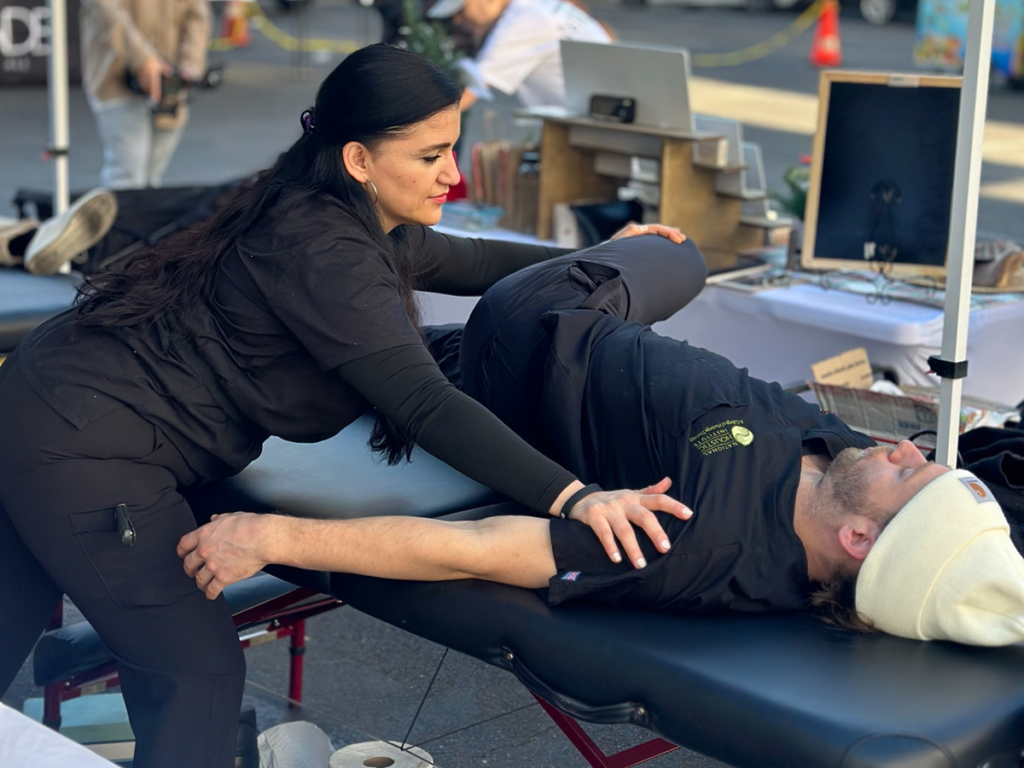
The Role of Neuromuscular Therapy in Professional Sports
Content Summary
NHI’s Phil Okazaki, CMT, BCTMB and ANMT Program Manager, shares key insights from a panel discussion featuring Phil Luis from Sports Medicine Institute and Paul Gowans from Free Motion Therapy on the vital role of Neuromuscular Therapy (NMT) in professional sports. This deep dive breaks down clinical reasoning, tissue tolerance, kinetic chain reassessments, navigating social media recovery trends, and changing the narrative around “injury-prone” athletes.
- Adapting Pressure & Respecting Tissue Tolerance | How Phil Luis and Paul Gowans move beyond the “no pain, no gain” mindset by balancing athlete preference with objective tissue response.
- Kinetic Chain Reassessment | Pivoting sessions when local tissue fails to respond by investigating distant movement drivers or transitioning from specific work to general recovery.
- Navigating Social Media Trends & Modalities | Evaluating popular recovery tools with evidence-informed reasoning while maintaining clinical scope and proper continuing education.
- Reframing the “Injury-Prone” Narrative | Eliminating fear-inducing language to empower athletes while addressing systemic movement dysfunctions across the kinetic chain.
What determines whether an athlete needs focused soft tissue work, movement re-education, recovery support, or simply a lighter session? Two neuromuscular therapists experienced in professional sports explain the reasoning behind their treatment decisions.
Meet the Neuromuscular Therapists
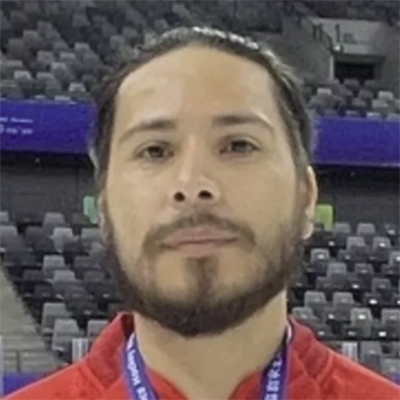
Paul Gowans of Free Motion Therapy
Paul Gowans is a neuromuscular therapist with a passion for helping individuals alleviate pain and improve their quality of life.
Paul holds additional certifications in personal training, Manual Lymphatic Drainage, Neurokinetic Therapy, cupping therapy, kinesiology taping, instrumented soft tissue mobilization, and Z-Health (functional neurology for pain relief and performance enhancement).
Paul’s career has included work with the San Jose Barracudas and the Chinese Women’s National Ice Hockey Team. His private practice, Free Motion Therapy, can be found in San Jose.
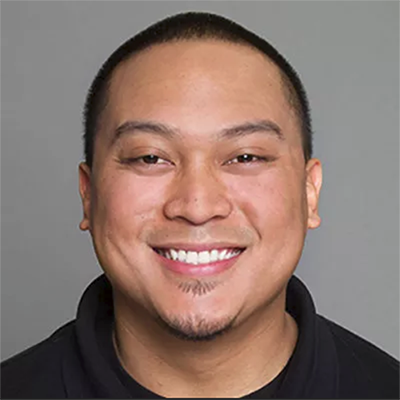
Phil Luis of Sports Medicine Institute
Phil Luis was always an active youth. His love of competitive football, track & field, basketball, and volleyball fueled an interest in the human body and sports medicine.
Inspired by his family, Phil also knew he wanted to pursue a career where he was helping other people. Massage therapy seemed like a natural fit. His passion and knowledge allow him to design unique treatment plans and provide the best possible care for his clients.
Phil works regularly with the Stanford and Santa Clara Cross Country and Track & Field Teams, Palo Alto Stanford Aquatics, and professional athletes through the Sports Medicine Institute in Palo Alto.
Professional sports massage is often associated with advanced techniques, specialized equipment, and the latest recovery trends. Inside the treatment room, however, effective care depends less on how many techniques a therapist knows and more on whether the therapist can make the right decision at the right time.
An athlete’s needs can change rapidly. Travel, sleep, training load, competition, injury status, psychological stress, and the time remaining before the next competition can all influence what is appropriate during a session.
During a recent NHI panel discussion, neuromuscular therapists Paul and Phil shared how they evaluate these factors when working with elite and professional athletes. Their responses have been edited for length and clarity while preserving the meaning of the original conversation.
How do you decide whether an athlete needs direct tissue work, movement re-education, recovery-focused work, or collaboration with another healthcare professional?
Paul | A great deal depends on the athlete’s training load. I do not necessarily consider a travel day to be a day off. A four-hour bus ride, a six-hour flight, or a combination of travel and training can place considerable stress on the athlete.
I consider what the athlete has recently done and what they need to do next. Did they just compete? How much sleep did they get? Are they in the middle of a long road trip? Do they have practice the next morning?
If an athlete has had limited sleep, if they’re several days into a road trip, and they must practice the following day, I may not perform highly detailed work. I may return to Swedish massage and focus on a few areas without adding a significant amount of stress to the system.
My decision comes from a combination of what I see, what I feel, what the athlete tells me, and any training-load information available from the performance staff. If the athletes are wearing heart-rate monitors or using other performance-tracking systems, that information may provide additional context.
If they spend most of the game at a very high intensity, detailed work may not provide the greatest benefit that day. Helping the athlete settle and recover may be the best choice.
Phil | The broad answer is that it depends. An athlete’s needs can change from hour to hour based on what they are doing.
I combine what I observe, what I feel during palpation, what the athlete reports, and what the athletic trainer, physical therapist, or another provider shares with me. The decision should come from all of that information rather than from one finding alone.
Within my scope, I also want to collaborate with the healthcare professionals supporting the athlete. More qualified eyes and perspectives can help the team make better decisions and improve the support provided to the athlete.
Clinical Takeaway | The treatment plan should reflect the athlete’s current readiness and immediate performance demands – not simply the therapist’s preferred modality. “The best techniques are usually the simple ones.” – Phil Luis
What information should therapists consider before beginning the session?
Paul | I want to understand what the athlete has experienced since the previous session. Training is only one part of the total workload. Travel, sleep work, personal responsibilities, and stress can all affect recovery.
An athlete may arrive with the same complains they had during the previous session, but their capacity to receive treatment may be completely different. Someone who is well-rested during the offseason may tolerate a longer and more detailed session. That same athlete may need a much different approach after a game, a flight, or inadequate sleep.
I also want to know what comes next. If the athlete has another practice, lift, skate, or competition soon, the treatment must support that activity. I do not want to perform work that produces soreness or temporarily reduces the athlete’s ability to perform.
Phil | The athlete’s report is important, but we also have to observe how the athlete presents. Are they moving differently? Do they appear tired? Is their posture or breathing different? Does the tissue respond as expected?
I want to compare what the athlete says with what I see and feel. If those findings do not agree, I may need to ask more questions or modify the session.
The therapist should continue assessing throughout the treatment. The initial plan is not a contract. If the athlete’s response suggests that the approach is not appropriate, the therapist should be willing to change direction.
Clinical Takeaway | Assessment does not end when the athlete gets on the table. Treatment itself provides information that should continually shape the session.
How does treatment change between the offseason, preseason, and in-season?
Paul | The offseason generally allows us to perform more detailed work. Depending on the athlete’s schedule and needs, I may provide a 60 or 90-minute session and spend more time addressing specific patterns.
As the season approaches, treatment becomes more responsive to the athlete’s practice and competition schedule. Once the athlete is in-season, the emphasis is often on maintenance, recovery, and helping the athlete prepare for the next demand.
If an injury occurs, the therapist may become part of a rehabilitation plan after the athlete has been evaluated and cleared by the appropriate medical professional. Depending on the setting, the medical staff may provide the plan, or the therapist may be invited to contribute within their scope.
The goal is to support the athlete’s progression back to the performance staff and eventually back to participation.
Phil | The offseason is typically when the greatest performance gains can be pursued. Once preseason begins, what the athlete brings into the season is largely what the team will be trying to maintain.
During the season, the focus becomes helping the athlete remain available to practice and compete. That includes supporting recovery, managing accumulated fatigue, maintaining mobility, and reducing unnecessary stress.
There may still be opportunities to improve function, but we must consider the cost of the intervention. Treatment should not leave the athlete recovering from the treatment when they need to perform.
Clinical Takeaway | Offseason treatment may emphasize change. In-season treatment more often emphasizes readiness, recovery, and maintaining the athlete’s current capacity.
How do you determine the appropriate pressure, dosage, and pace?
Paul | I monitor the athlete’s response throughout the session. If I begin specific work and nothing is changing, I need to reconsider what I’m doing.
I may look at another part of the kinetic chain, modify the technique, reduce the intensity, introduce movement, or transition to more general Swedish massage. If an area is not responding, continuing to apply more force is not always the answer.
Sometimes the limitation is being driven by another region. Other times, the athlete’s system may simply be too fatigued or guarded to benefit from detailed work that day.
The therapist must be able to adapt in real time. The session that I was planning may not be the session the athlete ultimately needs.
Phil | I look at two different forms of tolerance; the athlete’s tolerance and the tissue’s tolerance.
Some athletes are accustomed to considerable discomfort. An ultradistance runner, for example, may be able to tolerate more intense sensations than someone who is not regularly exposed to that type of physical stress. That does not necessarily mean the tissue will not benefit from greater pressure.
The athlete may say, “I can take more,” while the tissue response, guarding, breathing, or movement tells us that more pressure is not appropriate.
The old idea of “no pain, no gain” should not guide treatment. Causing more pain does not mean the athlete will receive a better result or perform better afterward.
As therapists develop their palpation and observation skills, they become better able to identify when pressure is productive and when it is creating an unnecessary protective response.
Clinical Takeaway | Pressure should be based on the athlete’s response and the intended outcome, not how much discomfort the athlete or therapist can tolerate.
What do you do when the tissue is not responding as expected?
Paul | If I am working on the shoulder and the tissue is not changing, I may examine the trunk, opposite hip, or another area that contributes to the athlete’s movement pattern. The athlete’s symptoms may be local, but the factor maintaining the discomfort may not be.
If addressing related regions does not produce change, I may shift the purpose of the session. Instead of continuing with a performance “tune-up,” I may move toward general recovery work.
The therapist should not keep forcing the original plan simply because that was the plan at the beginning of the session.
Phil | Reassessment is what tells us whether our work is producing the intended effect. We can reassess movement, strength, comfort, or another relevant key performance indicator.
An athlete may request a particular amount of pressure because they prefer the sensation. We can use reassessment to show whether than pressure actually improved the intended function. If the athlete feels that the work was intense but performs worse afterward, the treatment did not accomplish the goal.
That creates an opportunity to educate the athlete and find a level of pressure that satisfies their preferences without negatively affecting performance.
Clinical Takeaway | A technique should earn its place in the session by producing a meaningful response. If the response is absent or negative, the therapist should modify the session.
How do you navigate treatment trends athletes discover through their teammates, friends, or social media?
Phil | This can be challenging because we live in the social-media age. Athletes regularly encounter new ideas and may arrive asking for something they saw on Instagram or TikTok.
When that happens, I continue to work within the approaches in which I am trained and competent. After the session, I research the requested modality and speak with colleagues or other healthcare professionals who understand it.
I am a strong advocate for continuing education. If the modality appears appropriate and credible training is available, I may take a class. I would not watch a short video and immediately perform that treatment on an athlete.
We have a responsibility to determine whether an approach is evidence-informed, appropriate for the athlete, and within our scope before offering it.
Paul | Many professional athletes already have access to cold plunges, saunas, steam rooms, compression systems, and other recovery tools. I ask what they have used before and how their tissue or performance have benefitted.
The science matters, but the athlete’s individual response and current circumstances also matter. If an athlete reports feeling better after a particular recovery method and their performance remains stable, it may be reasonable to continue. If performance or recovery begin regressing, the plan should be re-evaluated.
I also try to keep the number of variables limited. If an athlete receives bodywork, uses cold plunges, goes into a sauna, and introduces another intervention within the same period, it becomes difficult to isolate the treatment that created the greatest positive effect.
Clinical Takeaway | A popular treatment should not be dismissed automatically, but popularity is not sufficient evidence to provide it. Research, appropriate training, athlete response, and clinical context all matter.
How do you approach an athlete that considers themselves “injury-prone?”
Phil | I am careful about describing someone as “injury-prone.” Language can affect how athletes think about their bodies.
If an athlete repeated hears that they have a “bad knee” or are likely to be injured, they may internalize that message. They may begin hesitating, guarding, or expecting that area to fail.
I worked with a football player who believed he had bad knees. Biomechanically, the knee was functioning appropriately, but he hesitated when cutting on the field because he expected a problem. Part of the process involved changing the message from “my knee is bad” to “my knee can perform this movement.”
We still address the physical factors, but we should avoid language that reinforces fear or helplessness.
Paul | I look beyond the recurring symptom. If the athlete repeatedly reports shoulder pain, I want to consider the entire movement pattern.
In hockey, for example, shoulder symptoms may be influenced by trunk rotation, scapular position, hand placement, or a previous lower-extremity injury. The painful area may be working harder because another region is not contributing effectively.
Treating the shoulder may reduce the symptoms temporarily, but if we do not investigate what continues to load it, the problem may return.
I want to review the athlete’s history, understand the sport-specific movement, and examine how the body works as a connected system.
Clinical Takeaway | Recurring symptoms require more than repeated local treatment. Therapists should examine the athlete’s history, movement demands, kinetic-chain relationships, and the language being used to describe the problem.
What distinguishes clinical reasoning from simply performing techniques?
Paul | Clinical reasoning means knowing why you selected an intervention, monitoring what happens, and being willing to stop or change it. A technique is only useful if it is appropriate for that athlete at that moment.
The more advanced the environment becomes, the more important the foundational skills become. Palpation, assessment, Swedish massage, anatomy, kinesiology, and communication continue to matter.
Phil | Advanced techniques can be useful, but the therapist’s knowledge and judgement determine how those techniques are applied.
The athlete is not paying only for the modality. The athlete is paying for the therapist’s ability to assess the situation, make a decision, provide the work safely, and evaluate it’s efficacy.
The best technique is not necessarily the newest or most complicated one. It is the technique that supports the athlete’s needs and goals at the particular time.
Inside the Treatment Room, Every Decision has a Purpose
Neuromuscular Therapy in professional sports is not a predetermined sequence of techniques. It is a continuous decision-making process.
The therapist must consider the athlete’s workload, sleep, travel, recovery, injury history, sport-specific movements, upcoming demands, and response to treatment. The therapist must also recognize when focused work is appropriate, when a restorative session may be more valuable, and when another professional should become involved.
Strong foundational techniques remain essential, but their effectiveness depends on the reasoning behind them.
At the professional level, the question is not simply, “what technique can I perform?” It is, “what does this athlete need from me today; and how will I know whether it helped?”
In Part 2 of The Role of Neuromuscular Therapy in Professional Sports, the panel explore trust, professional boundaries, athlete advocacy, referral decisions, and collaboration with the larger healthcare and performance team.
Read part 2 of The Role of Neuromuscular Therapy in Professional Sports, Working as Part of the Team | Trust, Scope of Practice, and Collaboration in Professional Sports
Get the details on how to pursue a career in massage therapy and neuromuscular therapy with National Holistic Institute. Complete this form to connect with an admissions representative today.